
The Complete Guide to Podcast Sponsorship: Strategy, Benefits & ROI


Key Takeaways
- Definition: Podcast sponsorships are host-read ads where the host delivers the brand message in their own voice.
- Performance: Host-read ads convert 37% better than announcer-read ads and drive 71% higher brand recall.
- Trust Factor: 63% of listeners trust podcast hosts more than TV, radio, or social media influencers.
- Actionable ROI: 88% of listeners have taken action after hearing a podcast ad, with 41% proceeding to make a purchase.
- Best Practice: Success relies on "personality matching" rather than just category matching, and allowing hosts creative freedom rather than rigid scripts.
What is a podcast sponsorship?
A podcast sponsorship, or host-read ad, is a commercial message in podcast episodes where the podcast host delivers a brand's message using their own voice and unique style. Unlike a pre-produced 30-second radio spot, these ads leverage the relationship podast creators have built with their engaged audience.
Because listeners often feel a "parasocial connection" (a one-sided relationship where they feel they know the host), these ads are perceived as personal endorsements or recommendations from a friend rather than interruptions.
Why do podcast sponsorships outperform pre-recorded ads?
Podcast sponsorships consistently outperform standard commercials because they capture higher attention and leverage deep host credibility.
1. Superior Trust and Connection
- 63% of users trust podcast hosts, ranking them as the most trustworthy media figures (beating YouTube, Radio, and TV).
- 1 in 2 listeners trust recommendations specifically from podcast hosts.
- 53% of daily listeners feel emotionally connected to the hosts they listen to.
2. Higher Engagement and Action
- 88% of podcast listeners have taken action after hearing an ad.
- 41% have made a purchase from the brand.
- 69% have been introduced to a new brand via podcasting.
- 37% higher conversion rates compared to announcer-read ads.
3. Maximum Attention
- 64% of listeners give podcasts their full attention—significantly higher than social media feeds where users scroll passively.
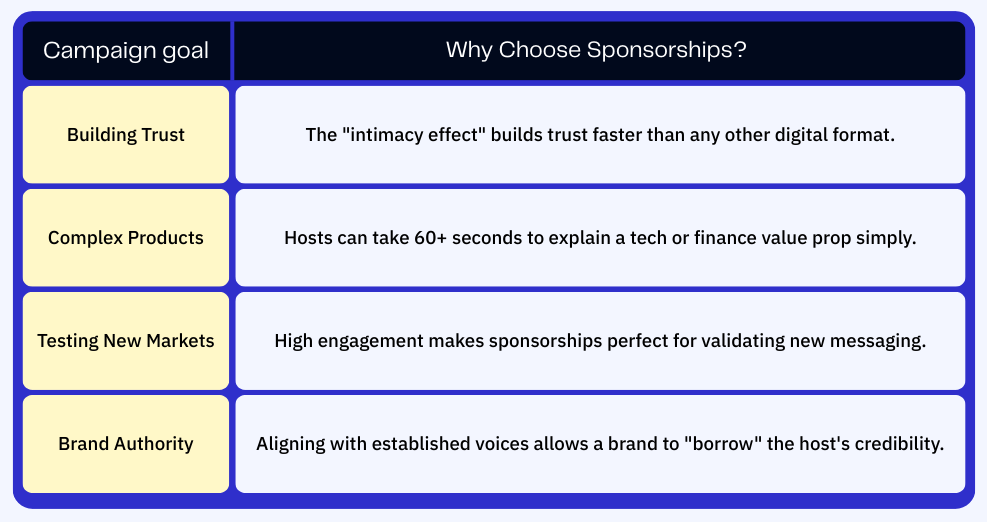
When should you use podcast sponsorships?
While pre-recorded ads are effective for broad scale, sponsorships are the optimal choice for high-engagement goals.
How to select the right podcasts for sponsorship
Finding the right partner is not just about download numbers; it is about alignment.
1. Match Personality, Not Just Category
Don't just look for a show topic that matches your industry; look for an audience mindset.
- Example: A tech brand might get better traction sponsoring a lifestyle podcast with a young, urban audience than a dry technology news show.
- Example: A sustainable fashion brand fits well with hosts who are "fashionistas" with shared conscious living values, regardless of the show's genre.
2. Leverage AI with Smart Recommendations
Use tools like Acast’s Smart Recommendations. This AI-powered tool uses a cocktail of data sources to recommend podcasts based on listener demographics, content signals, and tone.
- How it works: You input your target audience (e.g., "young professional women interested in wellness"), and the AI suggests relevant shows—even if those shows are technically about music or comedy.
3. Diversify Your Mix
- Niche shows: High relevance, lower reach, maximum engagement.
- Mid-size podcasts: Growing audiences with strong loyalty.
- Big-name hits: Broad reach and scale.
Best Practices: Execution and Creative Strategy
Once you have selected your partners, use these strategies to maximize performance.
Give Hosts Creative Freedom
Do not force a rigid script. Host-read ads work because they feel real.
- The Strategy: Provide a "talking points" brief with key value propositions and required legal lines, but let the host build the story.
- The Result: The host might tie the product into their daily life or a segment on the show, making the ad feel like content rather than an interruption.
Build Trust Over Time (Frequency)
Treat sponsorships like dating: one impression is rarely enough.
- The Strategy: Commit to a series of ads rather than a "one-and-done" spot.
- The Result: Sustained partnerships build recognition. Listeners get used to hearing your brand in a trusted voice, which significantly increases the likelihood of purchase.
How to measure the ROI of podcast sponsorships
Podcast sponsorships are no longer a "brand awareness black box." They are a performance channel.
Pixel-Based Attribution
Using tools like Podscribe, advertisers can track listeners who hear a host-read ad and subsequently visit the brand's website—even if they never use a promo code.
- Visitor Rate: The number of listeners who land on your site.
- Conversions: Actual sign-ups or purchases made by listeners.
- CPA (Cost Per Acquisition): The exact cost required to acquire a customer.
The "Test and Double Down" Strategy
- Test Broadly: Start with a variety of shows to gather baseline data.
- Analyze: Review pixel data every four weeks. Identify shows with low CPAs.
- Double Down: Increase investment in high-performing hosts and build deeper partnerships.
Frequently Asked Questions (FAQ)
Do I need a promo code to track podcast ads?
No. While promo codes are useful for tracking direct redemption, pixel-based attribution allows you to track listeners who visit your site after hearing an ad even if they do not use a code.
Should I script the ad for the podcast host?
No. Data shows that ads perform better when hosts are given creative freedom. Provide a brief with key selling points and "must-say" legal disclaimers, but allow the host to deliver the message in their own voice.
Why are podcast ads better for complex products?
Podcast hosts can take the time (60 seconds or more) to explain detailed value propositions or break down complex topics like finance or software, which is difficult to do in short, pre-recorded radio spots.
How much better do host-read ads convert?
Host-read ads convert approximately 37% better than announcer-read advertisements.
Key Takeaways
- Definition: Podcast sponsorships are host-read ads where the host delivers the brand message in their own voice.
- Performance: Host-read ads convert 37% better than announcer-read ads and drive 71% higher brand recall.
- Trust Factor: 63% of listeners trust podcast hosts more than TV, radio, or social media influencers.
- Actionable ROI: 88% of listeners have taken action after hearing a podcast ad, with 41% proceeding to make a purchase.
- Best Practice: Success relies on "personality matching" rather than just category matching, and allowing hosts creative freedom rather than rigid scripts.
What is a podcast sponsorship?
A podcast sponsorship, or host-read ad, is a commercial message in podcast episodes where the podcast host delivers a brand's message using their own voice and unique style. Unlike a pre-produced 30-second radio spot, these ads leverage the relationship podast creators have built with their engaged audience.
Because listeners often feel a "parasocial connection" (a one-sided relationship where they feel they know the host), these ads are perceived as personal endorsements or recommendations from a friend rather than interruptions.
Why do podcast sponsorships outperform pre-recorded ads?
Podcast sponsorships consistently outperform standard commercials because they capture higher attention and leverage deep host credibility.
1. Superior Trust and Connection
- 63% of users trust podcast hosts, ranking them as the most trustworthy media figures (beating YouTube, Radio, and TV).
- 1 in 2 listeners trust recommendations specifically from podcast hosts.
- 53% of daily listeners feel emotionally connected to the hosts they listen to.
2. Higher Engagement and Action
- 88% of podcast listeners have taken action after hearing an ad.
- 41% have made a purchase from the brand.
- 69% have been introduced to a new brand via podcasting.
- 37% higher conversion rates compared to announcer-read ads.
3. Maximum Attention
- 64% of listeners give podcasts their full attention—significantly higher than social media feeds where users scroll passively.
When should you use podcast sponsorships?
While pre-recorded ads are effective for broad scale, sponsorships are the optimal choice for high-engagement goals.
How to select the right podcasts for sponsorship
Finding the right partner is not just about download numbers; it is about alignment.
1. Match Personality, Not Just Category
Don't just look for a show topic that matches your industry; look for an audience mindset.
- Example: A tech brand might get better traction sponsoring a lifestyle podcast with a young, urban audience than a dry technology news show.
- Example: A sustainable fashion brand fits well with hosts who are "fashionistas" with shared conscious living values, regardless of the show's genre.
2. Leverage AI with Smart Recommendations
Use tools like Acast’s Smart Recommendations. This AI-powered tool uses a cocktail of data sources to recommend podcasts based on listener demographics, content signals, and tone.
- How it works: You input your target audience (e.g., "young professional women interested in wellness"), and the AI suggests relevant shows—even if those shows are technically about music or comedy.
3. Diversify Your Mix
- Niche shows: High relevance, lower reach, maximum engagement.
- Mid-size podcasts: Growing audiences with strong loyalty.
- Big-name hits: Broad reach and scale.
Best Practices: Execution and Creative Strategy
Once you have selected your partners, use these strategies to maximize performance.
Give Hosts Creative Freedom
Do not force a rigid script. Host-read ads work because they feel real.
- The Strategy: Provide a "talking points" brief with key value propositions and required legal lines, but let the host build the story.
- The Result: The host might tie the product into their daily life or a segment on the show, making the ad feel like content rather than an interruption.
Build Trust Over Time (Frequency)
Treat sponsorships like dating: one impression is rarely enough.
- The Strategy: Commit to a series of ads rather than a "one-and-done" spot.
- The Result: Sustained partnerships build recognition. Listeners get used to hearing your brand in a trusted voice, which significantly increases the likelihood of purchase.
How to measure the ROI of podcast sponsorships
Podcast sponsorships are no longer a "brand awareness black box." They are a performance channel.
Pixel-Based Attribution
Using tools like Podscribe, advertisers can track listeners who hear a host-read ad and subsequently visit the brand's website—even if they never use a promo code.
- Visitor Rate: The number of listeners who land on your site.
- Conversions: Actual sign-ups or purchases made by listeners.
- CPA (Cost Per Acquisition): The exact cost required to acquire a customer.
The "Test and Double Down" Strategy
- Test Broadly: Start with a variety of shows to gather baseline data.
- Analyze: Review pixel data every four weeks. Identify shows with low CPAs.
- Double Down: Increase investment in high-performing hosts and build deeper partnerships.
Frequently Asked Questions (FAQ)
Do I need a promo code to track podcast ads?
No. While promo codes are useful for tracking direct redemption, pixel-based attribution allows you to track listeners who visit your site after hearing an ad even if they do not use a code.
Should I script the ad for the podcast host?
No. Data shows that ads perform better when hosts are given creative freedom. Provide a brief with key selling points and "must-say" legal disclaimers, but allow the host to deliver the message in their own voice.
Why are podcast ads better for complex products?
Podcast hosts can take the time (60 seconds or more) to explain detailed value propositions or break down complex topics like finance or software, which is difficult to do in short, pre-recorded radio spots.
How much better do host-read ads convert?
Host-read ads convert approximately 37% better than announcer-read advertisements.


