Pre-roll, mid-roll, and post-roll podcast ads: what's the difference?


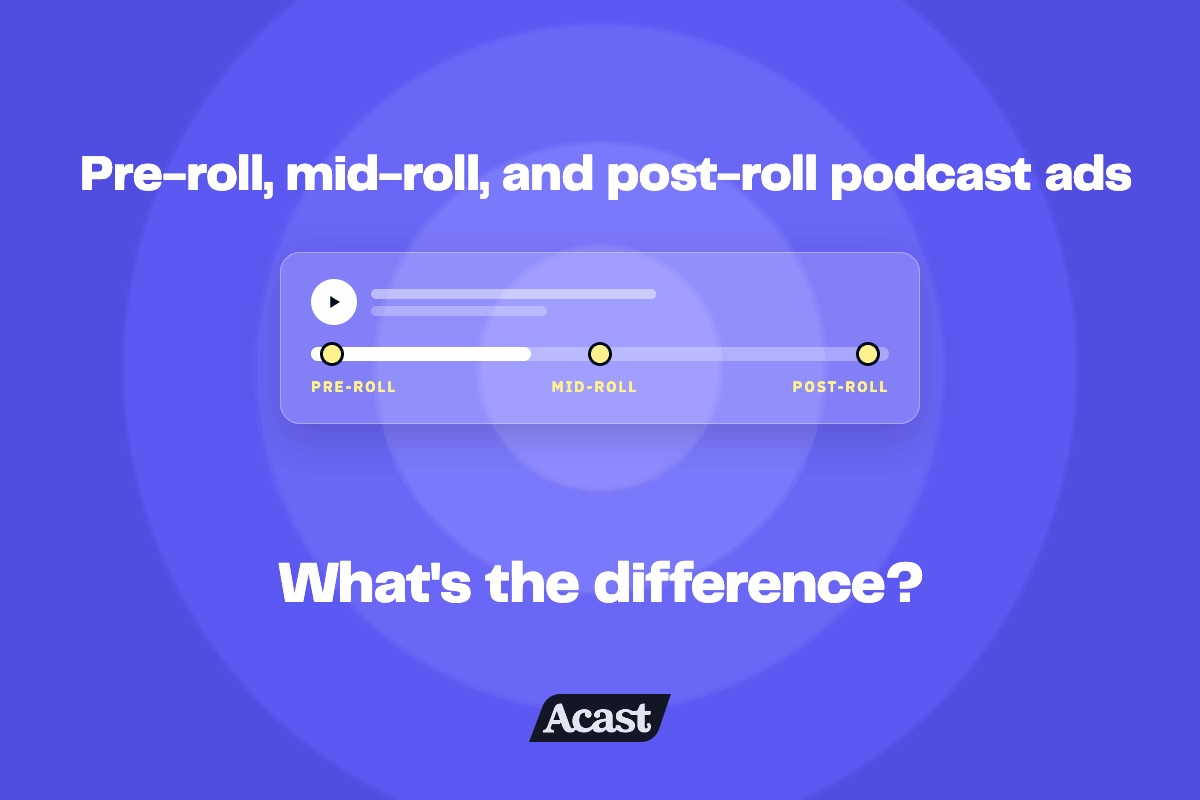
Every podcast ad lives in one of three slots: pre-roll (the start of an episode), mid-roll (the middle), or post-roll (the end). The slot changes who hears your ad and how engaged they are when they do.
The quick version: mid-roll delivers the highest engagement, pre-roll trades a little attention for guaranteed early reach, and post-roll reaches only the most committed listeners. Most of the industry charges accordingly, with mid-roll the priciest and post-roll the cheapest. Acast prices all three the same. Here's how to choose.
Pre-roll ads
Pre-roll ads play at or near the start of an episode, before or just after the intro. Everyone who presses play hears them, which makes pre-roll the reach play: you're guaranteed an audience before any drop-off.
The tradeoff is context. Listeners are still settling in, sometimes still choosing what to listen to, so attention is good but not peak. Pre-rolls suit short, punchy creative: brand reminders, promo codes, and offers that don't need a long setup.
Mid-roll ads
Mid-roll ads play during the body of the episode, typically in shows at least 10 minutes long. This is the premium slot for attention, and the listening data explains why: by mid-episode the listener is committed, often mid-task (driving, cooking, working out), and far less likely to skip.
Mid-rolls fit naturally into the flow of conversation, which is why host-read sponsorships almost always run here. If you're paying for a host's voice and credibility, you want it landing when attention peaks.
Post-roll ads
Post-roll ads play at the end of an episode. Plenty of listeners drop off before then, so reach is lowest.
But the listeners who do hear a post-roll are the show's most loyal audience, the ones who stay to the very end. For niche offers aimed at superfans or retargeting-style messages, that concentrated loyalty is the point.
What each placement costs
Across most of the podcast industry, slot position sets the rate. Mid-roll commands the highest CPM, pre-roll sits in the middle, post-roll is the cheapest. The logic is that you pay for attention, and attention peaks mid-episode.
Acast prices all three slots equally. The reason is how we count an impression: a client impression only registers after 100% of the ad has streamed continuously, measured to IAB standards. A post-roll impression clears the same bar as a mid-roll one, so it carries the same value. You're not charged a premium for mid-roll, and you're not penalized for buying post-roll.
Which placement should you buy?
- Maximum reach: pre-roll. Everyone who starts the episode hears it.
- Maximum engagement and conversion: mid-roll. Peak attention, natural fit for host-reads.
- Most loyal audience: post-roll. Smallest reach, but the listeners who stay to the end.
In practice, many campaigns blend slots: mid-roll for the core message, pre- and post-roll to build frequency and extend reach. At Acast, all three placements are delivered through dynamic ad insertion, meaning ads are placed at listen time rather than baked into the file, so your campaign stays current across a show's entire back catalog.
For what each slot costs, see our guide to how much podcast advertising costs, or build a campaign with the placements you want in Acast's ad platform.
Frequently asked questions
What is a pre-roll podcast ad?
A pre-roll is an ad that plays at or near the start of a podcast episode. Every listener who starts the episode hears it, so it guarantees reach. Most of the industry prices it below mid-roll, though Acast prices all slots equally.
What is a mid-roll podcast ad?
A mid-roll is an ad placed in the middle of an episode, where listener attention and retention are highest. It's the most effective placement and, across most of the industry, the most expensive. It's the standard slot for host-read sponsorships.
What is a post-roll podcast ad?
A post-roll plays at the end of an episode. It reaches fewer listeners but the most loyal ones. Most platforms price it lowest; Acast prices it the same as pre- and mid-roll.
Does ad placement affect the price on Acast?
No. Acast prices pre-roll, mid-roll, and post-roll equally. A client impression is only counted once 100% of the ad has streamed continuously, measured to IAB standards, so every slot meets the same quality bar regardless of where it sits in the episode.
Which podcast ad placement performs best?
Mid-roll, for most objectives. Listeners are committed and engaged mid-episode, which drives stronger recall and response. Pre-roll wins on guaranteed reach and post-roll on audience loyalty.
Every podcast ad lives in one of three slots: pre-roll (the start of an episode), mid-roll (the middle), or post-roll (the end). The slot changes who hears your ad and how engaged they are when they do.
The quick version: mid-roll delivers the highest engagement, pre-roll trades a little attention for guaranteed early reach, and post-roll reaches only the most committed listeners. Most of the industry charges accordingly, with mid-roll the priciest and post-roll the cheapest. Acast prices all three the same. Here's how to choose.
Pre-roll ads
Pre-roll ads play at or near the start of an episode, before or just after the intro. Everyone who presses play hears them, which makes pre-roll the reach play: you're guaranteed an audience before any drop-off.
The tradeoff is context. Listeners are still settling in, sometimes still choosing what to listen to, so attention is good but not peak. Pre-rolls suit short, punchy creative: brand reminders, promo codes, and offers that don't need a long setup.
Mid-roll ads
Mid-roll ads play during the body of the episode, typically in shows at least 10 minutes long. This is the premium slot for attention, and the listening data explains why: by mid-episode the listener is committed, often mid-task (driving, cooking, working out), and far less likely to skip.
Mid-rolls fit naturally into the flow of conversation, which is why host-read sponsorships almost always run here. If you're paying for a host's voice and credibility, you want it landing when attention peaks.
Post-roll ads
Post-roll ads play at the end of an episode. Plenty of listeners drop off before then, so reach is lowest.
But the listeners who do hear a post-roll are the show's most loyal audience, the ones who stay to the very end. For niche offers aimed at superfans or retargeting-style messages, that concentrated loyalty is the point.
What each placement costs
Across most of the podcast industry, slot position sets the rate. Mid-roll commands the highest CPM, pre-roll sits in the middle, post-roll is the cheapest. The logic is that you pay for attention, and attention peaks mid-episode.
Acast prices all three slots equally. The reason is how we count an impression: a client impression only registers after 100% of the ad has streamed continuously, measured to IAB standards. A post-roll impression clears the same bar as a mid-roll one, so it carries the same value. You're not charged a premium for mid-roll, and you're not penalized for buying post-roll.
Which placement should you buy?
- Maximum reach: pre-roll. Everyone who starts the episode hears it.
- Maximum engagement and conversion: mid-roll. Peak attention, natural fit for host-reads.
- Most loyal audience: post-roll. Smallest reach, but the listeners who stay to the end.
In practice, many campaigns blend slots: mid-roll for the core message, pre- and post-roll to build frequency and extend reach. At Acast, all three placements are delivered through dynamic ad insertion, meaning ads are placed at listen time rather than baked into the file, so your campaign stays current across a show's entire back catalog.
For what each slot costs, see our guide to how much podcast advertising costs, or build a campaign with the placements you want in Acast's ad platform.
Frequently asked questions
What is a pre-roll podcast ad?
A pre-roll is an ad that plays at or near the start of a podcast episode. Every listener who starts the episode hears it, so it guarantees reach. Most of the industry prices it below mid-roll, though Acast prices all slots equally.
What is a mid-roll podcast ad?
A mid-roll is an ad placed in the middle of an episode, where listener attention and retention are highest. It's the most effective placement and, across most of the industry, the most expensive. It's the standard slot for host-read sponsorships.
What is a post-roll podcast ad?
A post-roll plays at the end of an episode. It reaches fewer listeners but the most loyal ones. Most platforms price it lowest; Acast prices it the same as pre- and mid-roll.
Does ad placement affect the price on Acast?
No. Acast prices pre-roll, mid-roll, and post-roll equally. A client impression is only counted once 100% of the ad has streamed continuously, measured to IAB standards, so every slot meets the same quality bar regardless of where it sits in the episode.
Which podcast ad placement performs best?
Mid-roll, for most objectives. Listeners are committed and engaged mid-episode, which drives stronger recall and response. Pre-roll wins on guaranteed reach and post-roll on audience loyalty.