By the time the world searches, podcast listeners already know what’s up.


Three patterns, same behavior.
In February 2026, as tensions escalated into the Iran War, podcast listening began climbing days before Google search spiked. When the Super Bowl approached, podcast engagement rose steadily while search and YouTube waited for kickoff. Before the Academy Awards ceremony, podcast listeners were already deep in nominee analysis and cultural debate while the broader public stayed quiet.
Podcasts don't follow the news cycle, they’re starting the conversation.
What's actually happening?
When a story is about to break, podcast listeners are already there. Not reacting to headlines, but building context before the headlines exist. While search spikes at the moment of the event and YouTube surfaces the clip, podcast attention builds gradually in the days and weeks leading up.
This isn't about podcasts being "early adopters" in the demographic sense. It's about the medium itself operating on a different timeline. Podcast listeners seek interpretation before outcomes are determined. They want the matchup analysis before the final score, the geopolitical context before the declaration, the cultural stakes before the envelope opens.
Understanding builds before attention peaks.
What’s the marketing opportunity?
Most media planning treats all channels as if they operate on the same clock. Budget flows to wherever the audience is largest at the moment of peak attention. But peak attention is too late.
By the time search volume spikes, opinions have already formed. The narrative is set. A brand showing up at the Super Bowl kickoff is entering a conversation that's been running for two weeks in podcast feeds. An advertiser reacting to a cultural moment at its viral peak is joining after the influential segment has already moved on.
Podcasts offer access to the window before consensus hardens. That's not just an earlier impression, it's a fundamentally different type of influence. You're not competing for attention at the moment everyone is paying attention. You're shaping how people will interpret the moment when it arrives.
Why traditional measurement misses this
If you measure podcast performance by download peaks, you're optimizing for the wrong thing. The value isn't in the size of the audience at the event itself, it's in reaching listeners during the build, when they're actively constructing their understanding of what's about to happen.
This shows up most vividly across certain categories:
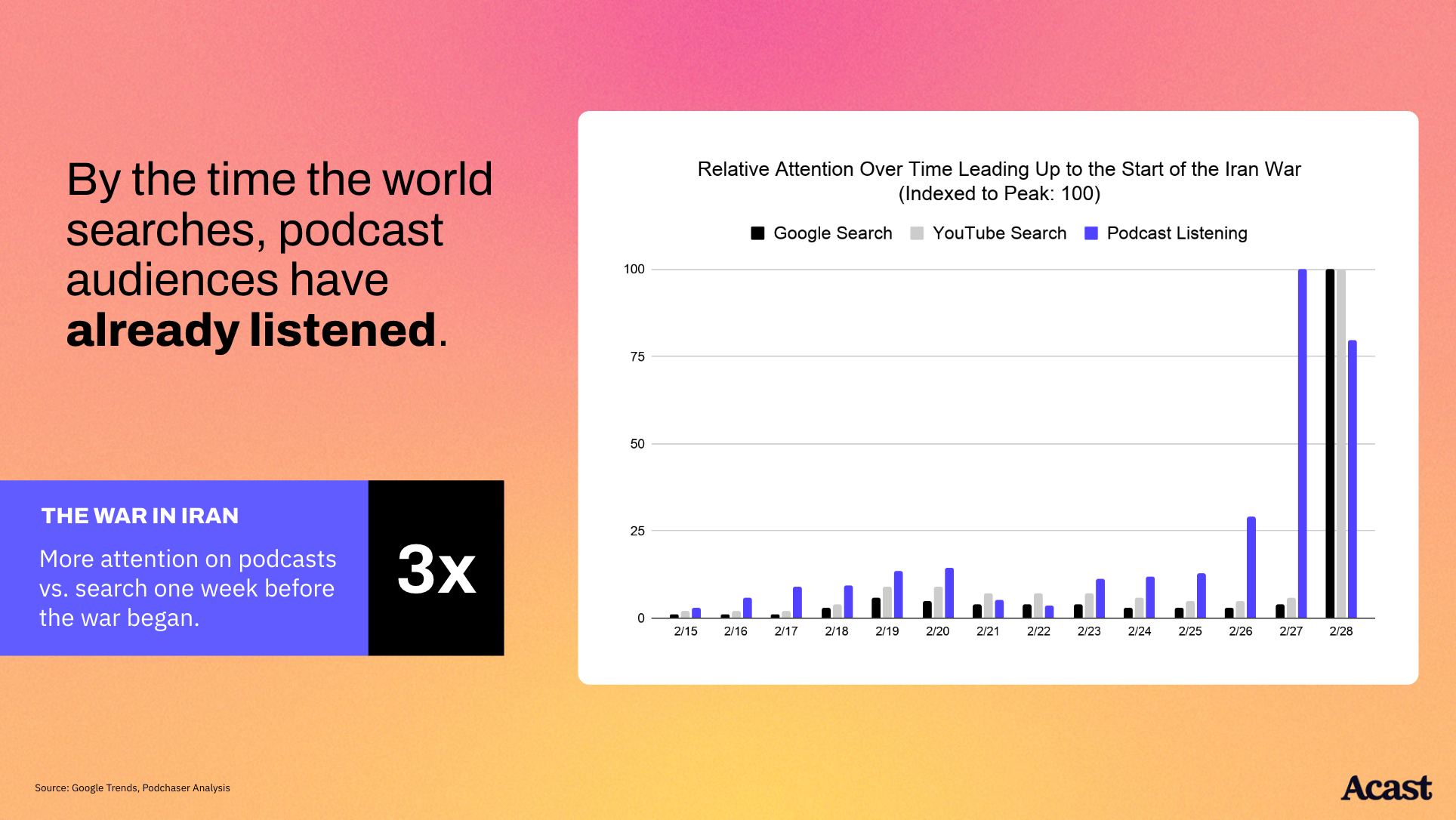
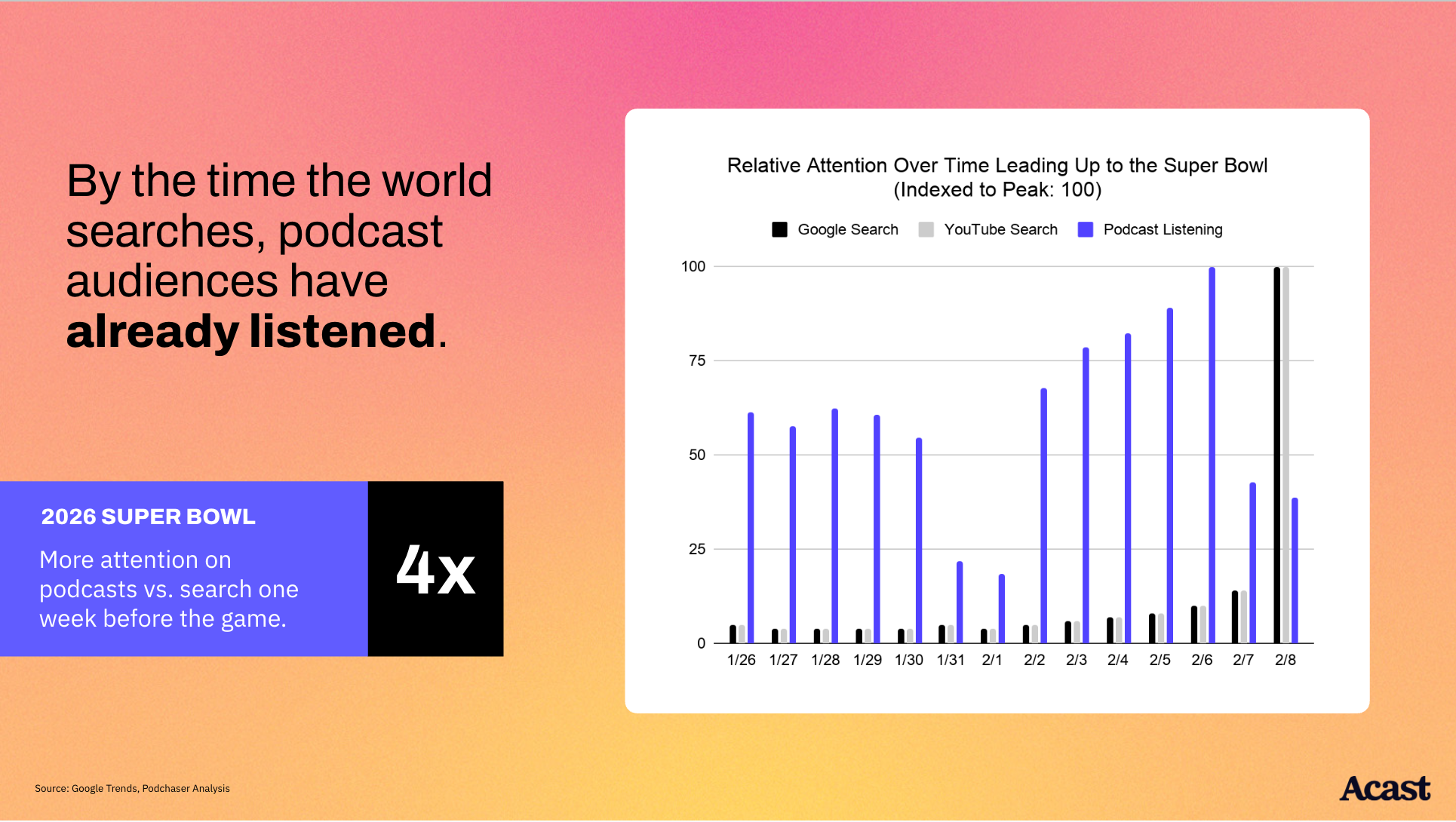
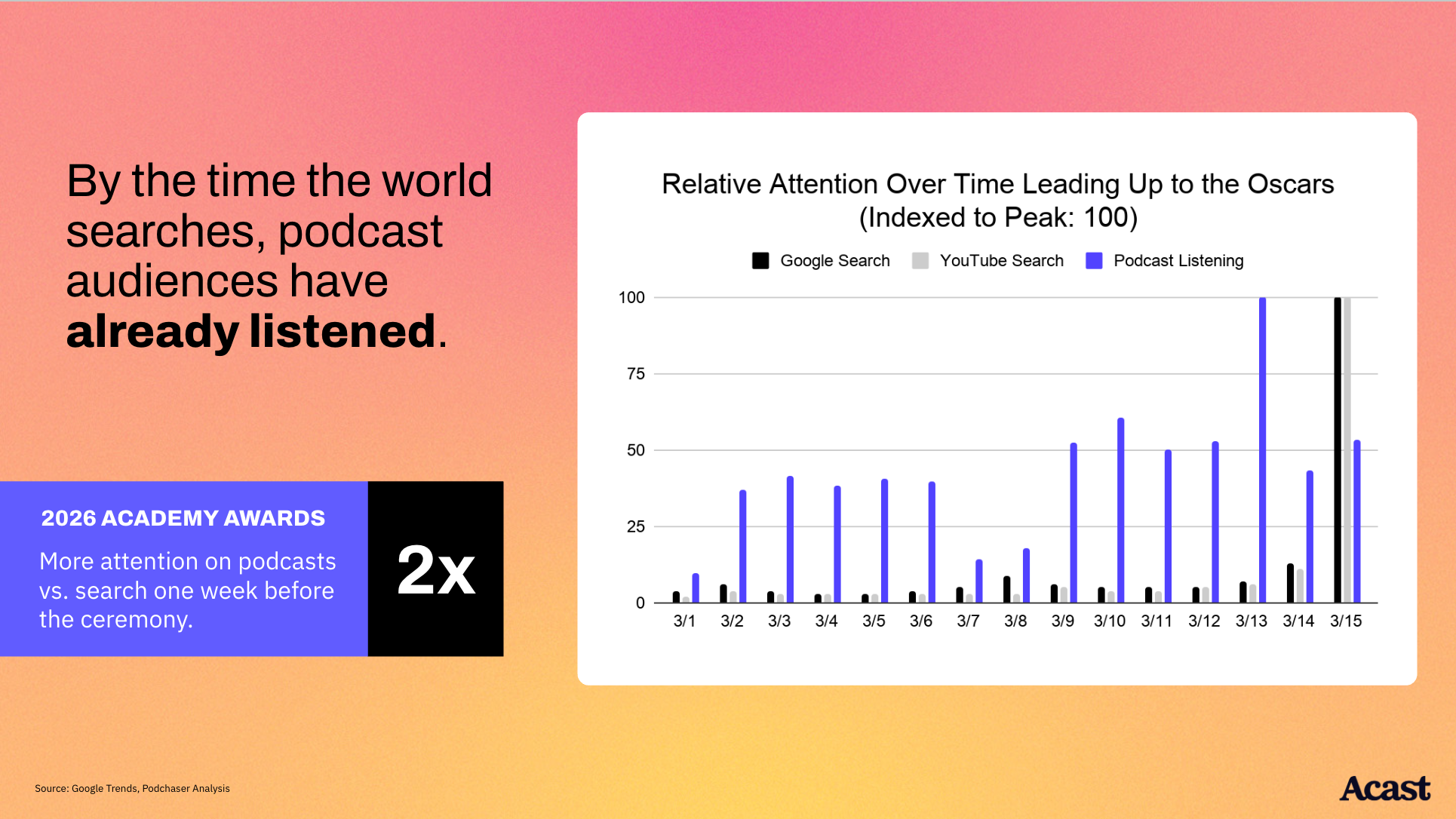
The pattern holds because podcast consumption is driven by anticipation, not reaction. Listeners don't tune in to find out what happened—they already know. They're there for the interpretation, and interpretation happens earliest in audio.
The strategic shift
If podcast listeners are ahead of the attention curve, then effective podcast advertising requires a different approach to timing. Not "wait for the moment and amplify it," but "identify the build and align with it."
That means tracking podcast listening volume as a forward indicator, not a trailing metric. It means creative messaging that speaks to what's unfolding, not what just concluded. It means measuring pre-event momentum instead of peak reach, because by the time you're measuring the peak, the influential audience has already moved on to the next thing they'll understand before everyone else does.
Podcasts aren't just another channel in the media mix. They're operating on a fundamentally different timeline, one where understanding precedes attention, and influence happens before the moment the rest of the world starts searching.
Three patterns, same behavior.
In February 2026, as tensions escalated into the Iran War, podcast listening began climbing days before Google search spiked. When the Super Bowl approached, podcast engagement rose steadily while search and YouTube waited for kickoff. Before the Academy Awards ceremony, podcast listeners were already deep in nominee analysis and cultural debate while the broader public stayed quiet.
Podcasts don't follow the news cycle, they’re starting the conversation.
What's actually happening?
When a story is about to break, podcast listeners are already there. Not reacting to headlines, but building context before the headlines exist. While search spikes at the moment of the event and YouTube surfaces the clip, podcast attention builds gradually in the days and weeks leading up.
This isn't about podcasts being "early adopters" in the demographic sense. It's about the medium itself operating on a different timeline. Podcast listeners seek interpretation before outcomes are determined. They want the matchup analysis before the final score, the geopolitical context before the declaration, the cultural stakes before the envelope opens.
Understanding builds before attention peaks.
What’s the marketing opportunity?
Most media planning treats all channels as if they operate on the same clock. Budget flows to wherever the audience is largest at the moment of peak attention. But peak attention is too late.
By the time search volume spikes, opinions have already formed. The narrative is set. A brand showing up at the Super Bowl kickoff is entering a conversation that's been running for two weeks in podcast feeds. An advertiser reacting to a cultural moment at its viral peak is joining after the influential segment has already moved on.
Podcasts offer access to the window before consensus hardens. That's not just an earlier impression, it's a fundamentally different type of influence. You're not competing for attention at the moment everyone is paying attention. You're shaping how people will interpret the moment when it arrives.
Why traditional measurement misses this
If you measure podcast performance by download peaks, you're optimizing for the wrong thing. The value isn't in the size of the audience at the event itself, it's in reaching listeners during the build, when they're actively constructing their understanding of what's about to happen.
This shows up most vividly across certain categories:
The pattern holds because podcast consumption is driven by anticipation, not reaction. Listeners don't tune in to find out what happened—they already know. They're there for the interpretation, and interpretation happens earliest in audio.
The strategic shift
If podcast listeners are ahead of the attention curve, then effective podcast advertising requires a different approach to timing. Not "wait for the moment and amplify it," but "identify the build and align with it."
That means tracking podcast listening volume as a forward indicator, not a trailing metric. It means creative messaging that speaks to what's unfolding, not what just concluded. It means measuring pre-event momentum instead of peak reach, because by the time you're measuring the peak, the influential audience has already moved on to the next thing they'll understand before everyone else does.
Podcasts aren't just another channel in the media mix. They're operating on a fundamentally different timeline, one where understanding precedes attention, and influence happens before the moment the rest of the world starts searching.